
ARTICLES
A Compass for Contemporary Art Chapter 5: Contemporary Art That Continues to Cross Borders
2026.05.29
FEATURE

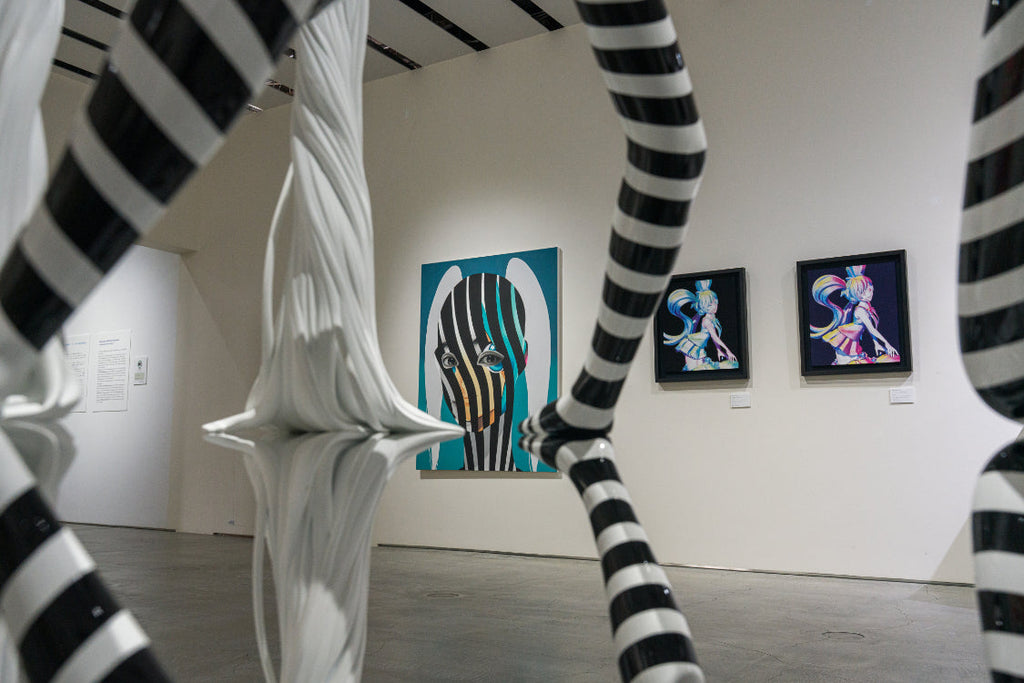
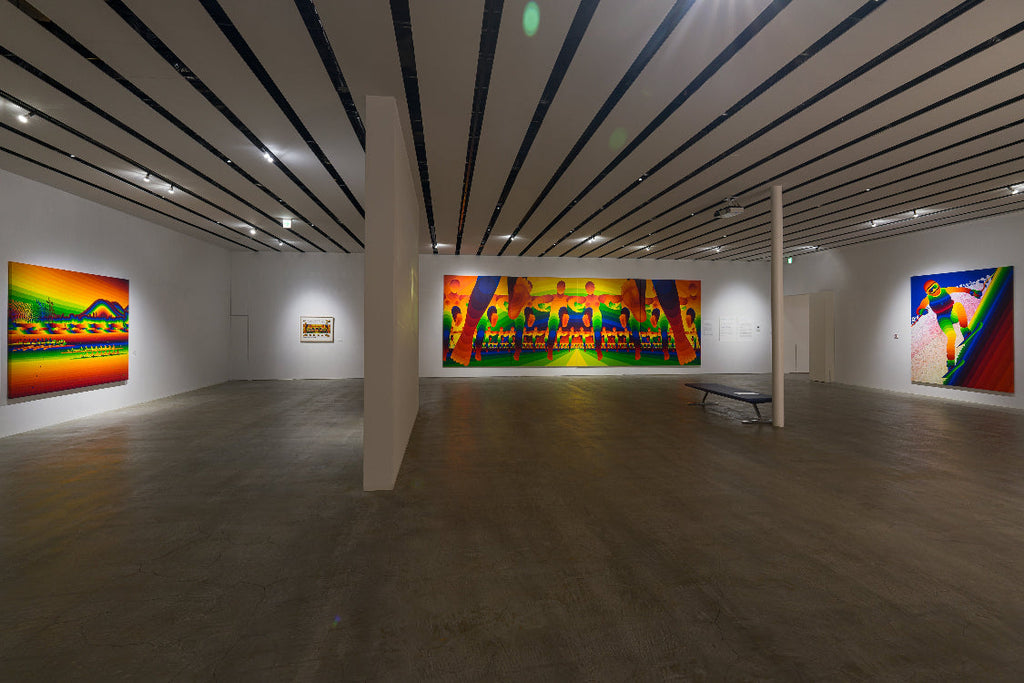
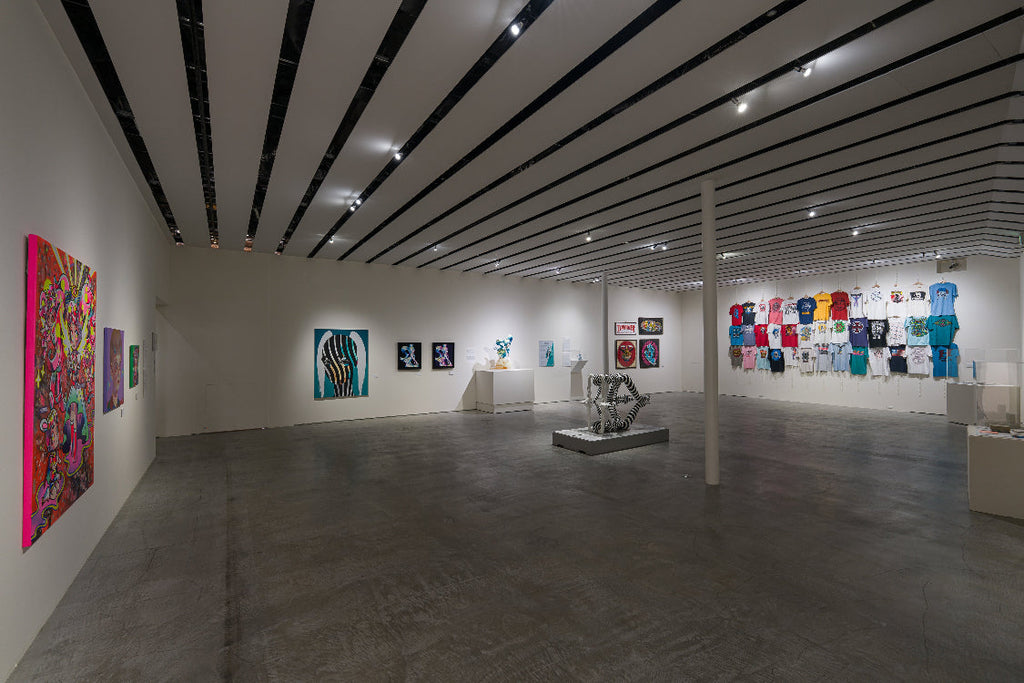
Exhibition view ©Karuizawa New Art Museum
A Compass for Contemporary Art: Guided by the Exhibition "Connecting and Expanding (Crossing Borders and Expanding the Realm of Expression)"
This series has been an attempt to explore ways of looking at artworks through the Karuizawa New Art Museum exhibition “Connecting, Expanding” (Crossing and Expanding Fields of Expression), which approaches contemporary art from a variety of angles. In this final chapter, I would like to look back on the series so far and once again ask: What is contemporary art, and how might it connect with our everyday lives?
What Has Contemporary Art Crossed Beyond?
This series began with the simple question, What is contemporary art? With the emergence of photographic technology, art changed from serving the role of visually conveying things into something that moved beyond the beauty of mere depiction, transforming into new methods and forms of expression. In this way, expression expanded to present ideas and concepts themselves: things that had not previously appeared in this form.
For that reason, we explored practical perspectives on how to view art works −Changing one’s angle, paying attention to technique, tracing chronology, asking questions. Each of these is an approach that anyone can try starting today, even without specialized knowledge.
Through Fluxus members Ay-O and Mieko Shiomi, we also encountered possibilities in art that do not end with simply looking. By introducing experiences in which color is repainted in rainbow hues, felt with the fingertips, heard by listening closely, or turned into something in which one becomes the performer, we confirmed that attempts to open not only the five senses but even a sixth sense still come vividly toward us today, even after several decades.

Exhibition view ©Karuizawa New Art Museum
We also looked at how even a single method can open in remarkably diverse directions, using manga as a concrete example. Making invisible history visible, expressing the very sense of time itself, reconstructing character culture to awaken the imagination: starting from the same point of departure of manga, works can spread out in strikingly different ways. Looking as well from formats such as video and painting, we have no reason to doubt that there exists an infinite variety of works.
Looking back in this way, we realize that this journey was not simply one of moving through diverse works. It was a process of discovering how art has crossed the many boundary lines we unconsciously drew, such as genre, bodily sensation, an era, and media and how it has shaken the very way we see the world.
Contemporary Art as a Device for Rethinking the World

Exhibition view ©Karuizawa New Art Museum
Then, is there anything shared by contemporary art, even while it contains such diversity?
If one thing can be said, it is that contemporary art does not “hand over answers”; rather, it “opens questions.” Whenever something before us is difficult to understand, we tend to seek an answer right away. If we search on the internet, an answer appears immediately, and reading an explanatory panel can make us feel reassured.
Yet one might say that the interest of contemporary art lies precisely in its ability to let us hold on to that lack of understanding without resolving it. Fear or discomfort toward the unknown is also a kind of feeling, and by observing the movement of our hearts when we confront it, something new may begin to open.
Art and creative practice are also influenced by the times, culture, and environment of the present, and they may reflect these consciously or unconsciously. Contemporary art may be a device that unsettles the ways of seeing the world that we have long taken for granted.
What About a Life Lived with Art?

Exhibition view ©Karuizawa New Art Museum
Art is not something to be appreciated only within the institution of the museum. It can also be seen on Instagram through the small device of a smartphone. There are works placed or created in public spaces throughout the city. It would not be an exaggeration to say that art has already blended into daily life.
If art were even closer at hand, we might be able to discover new worlds. Bringing art into a room creates change in the space. By being in a place that enters one’s view every day, the interpretation of a work may also change. Once one begins a life lived with art, the relationship with the work continues.
Your Own Compass
As the exhibition title “Connecting, Expanding” suggests, each individual work is not complete in itself. It connects with the viewer’s memory and bodily sensation, and seeps out beyond the exhibition space. Then, beyond that point, it “connects” with something else and “expands” in a new direction.
This series began as a compass for that process. But the real compass is not in these words. It is within you. Where you choose to go with that compass is up to you.
RELATED ARTICLES

ARTICLES CATEGORY

