
ARTICLES
A Compass for Contemporary Art Chapter 1: What Is Contemporary Art, and How Does It Deepen Our Way of Looking at Art?
2025.12.15
FEATURE

A Compass for Contemporary Art: Guided by the Exhibition "Connecting and Expanding (Crossing Borders and Expanding the Realm of Expression)"
Many people feel bewildered when confronted with contemporary art, wondering "how should I look at this?" It can be perplexing, difficult to grasp, and sometimes leaves viewers at a loss. Yet, this very sense of uncertainty is also one way to enjoy contemporary art.
This series aims to explore perspectives for viewing artworks, using the Karuizawa New Art Museum's exhibition "Connecting and Expanding (Crossing Borders and Expanding the Realm of Expression)" as a guide. In this first installment, we begin with the fundamental question: "What is contemporary art?"
What Was Art Before the Contemporary Era?
Humans have long been associated with art. Cave paintings date back tens of thousands of years, existing as a means to "visually communicate." Art evolved alongside society as a tool for religious propagation and information transmission, particularly in eras of low literacy. What mattered most was accuracy in depiction and the ability to captivate viewers with beauty. Techniques were refined for these purposes, and audiences understood what they saw through direct visual representation.
However, as civilization developed from the 19th to the 20th century and technologies like photography emerged that could capture reality exactly as it appeared, art's role shifted beyond merely "visual communication." Art sought new purposes, and from this shift, contemporary art emerged.
What is "Contemporary" Art? From "Communicating" to "Thinking"
Contemporary art generally refers to artistic expressions from the 20th century onwards, or after World War II. It isn't bound by existing formats like painting or sculpture, nor limited by traditional methods of expression. Furthermore, works began to appear that contained social messages or posed questions to viewers.
One of the most famous contemporary artworks and a turning point in the concept of art was Marcel Duchamp's "Fountain" from 1917. "Fountain" was simply a urinal with a signature on it. It was rejected from New York's Independent Exhibition, where anyone could exhibit by paying a fee. The reason given was that a mass-produced item dealing with excretion that merely had a signature couldn't be considered art.
However, Duchamp created the concept of "Ready-mades"—finding beauty in mass-produced items not created by the artist and presenting them as artworks. By presenting industrial products not intended for aesthetic appreciation as art, he challenged the world with the question: "What is art?"
This type of art, which prioritizes concepts and ideas, is called "Conceptual Art." According to this approach, a work's value lies not in the technical skill or beauty of creation, but in presenting ideas never seen before. For pioneering this concept, Duchamp is now known as the "father of contemporary art."

Duchamp continued various approaches throughout his career. His "Rotoreliefs" were drawings produced with an industrial purpose in mind. ©Karuizawa New Art Museum
The "Liberation of Expression" in Post-War Japanese Art—Gutai Art Association

Works by Sadamasa Motonaga and Atsuko Tanaka of the Gutai Art Association
The question "What is art?" that Duchamp posed wasn't limited to the West. In post-war Japanese art, similar questions arose, with artists seeking answers. A symbolic example is the Gutai Art Association, commonly known as Gutai, founded by Jiro Yoshihara in 1954.
Gutai emerged as Japan entered its period of high economic growth after the war, seeking new forms of art. The group expanded upon painting principles received from Tsuguharu Foujita, advocating "never imitate others" and "create something that has never existed before." Yoshihara and Gutai members explored new artistic methods beyond traditional painting and sculpture—painting with feet, tearing paper, throwing paint—producing and exhibiting numerous works.
As photography and printing technologies advanced and art's role changed worldwide, Japanese artists also began questioning not just "what to create" but "why do it this way" and "what meaning does an action hold." Gutai represents a major turning point in Japanese contemporary art and currently enjoys high international acclaim.
Given this history, contemporary art can be understood not as an imitation of Western concepts, but as a phenomenon where methods and forms of expression expanded simultaneously around the world.
Hikari Shimoda as a Contemporary Form of Pop Art

Hikari Shimoda “Children of This Planet #63”
The exhibition features works by contemporary artists who build on this historical progression. Hikari Shimoda, whose work serves as the main visual for the "Connecting and Expanding" exhibition being held in 2025, presents one form of contemporary pop art.
Pop Art, established in the 1960s, characteristically incorporated bold elements from everyday images—advertisements, comics, and popular culture. While dealing with symbols of mass production and consumption, it maintains a critical aspect that questions "what do we see and desire as we live our lives?"
Shimoda's work incorporates cute elements from Japanese manga and anime while vividly depicting inner conflicts and anxieties through children's figures. At first glance, her style appears colorful and soft, but the expressions convey anxiety and hurt. In some works, she pastes newspaper articles from the Shinano Mainichi Shimbun about war and disasters, then covers them with colorful mediums. This visually represents contemporary themes lurking behind bright colors—societal undercurrents and endless conflicts. This multilayered quality is one of pop art's attractions.

A close-up of Hikari Shimoda’s “Neo Raigo-zu.” Newspaper text faintly shows through beneath the vermilion layer.
From post-war Japan to the present, the realm of expression continues to "connect and expand." We should keep an eye on how such contemporary pop art develops as expressive territories continue to connect and expand.
Additionally, Hikari Shimoda will hold a solo exhibition "For those who are hurt and broken" at Whitestone Gallery Karuizawa within the Karuizawa New Art Museum starting December 13. Comparing the museum and gallery exhibitions might lead to new discoveries.
HIKARI SHIMODA: For those who are hurt and broken
Knowing the Basics, Enjoying Border Crossings
Contemporary art encompasses diverse expressions, each posing different questions to viewers. The shift from "visual communication" to "things that make us think" and the expansion of expression are important keys to understanding contemporary art.
However, the "Connecting and Expanding (Crossing Borders and Expanding the Realm of Expression)" exhibition presents an even further landscape. It features works that cross even the boundaries of "contemporary art," blurring genre lines among manga, anime, music, sports, and various expressions. The collected works, including those by Hikari Shimoda introduced here, demonstrate cutting-edge possibilities in expression that can't be captured by existing categories.
Understanding classifications helps us appreciate what transcends them. Contemporary art becomes more interesting when we approach works from multiple angles rather than leaning solely on either knowledge or sensation.
This series serves as a "compass" for appreciation. We invite you to join us in this endeavor to find your own bearings as we engage with artworks through various perspectives.

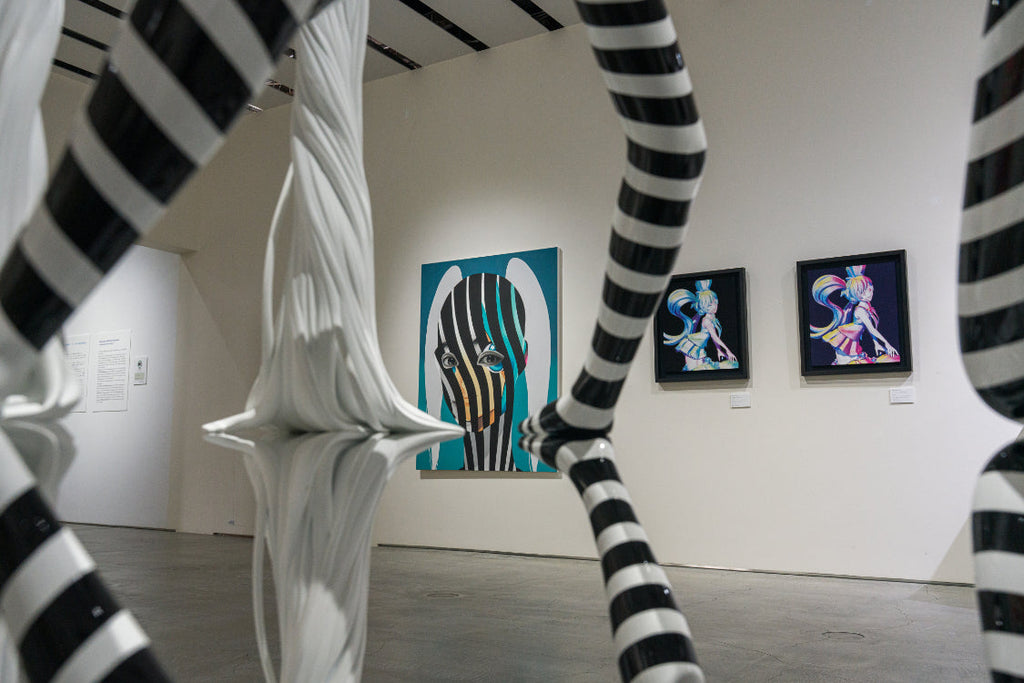
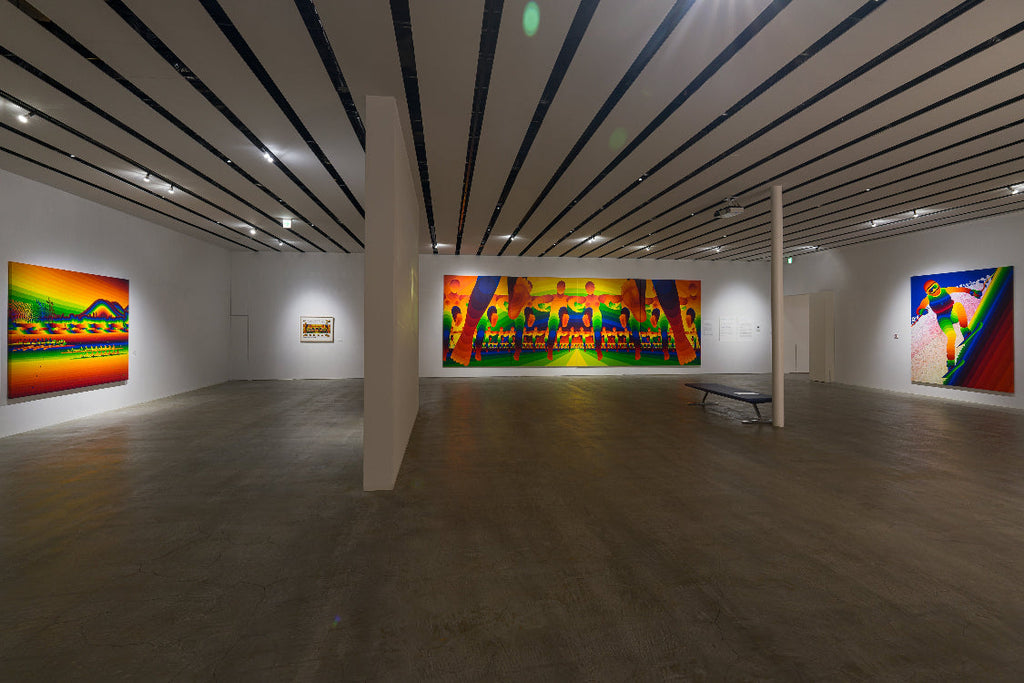
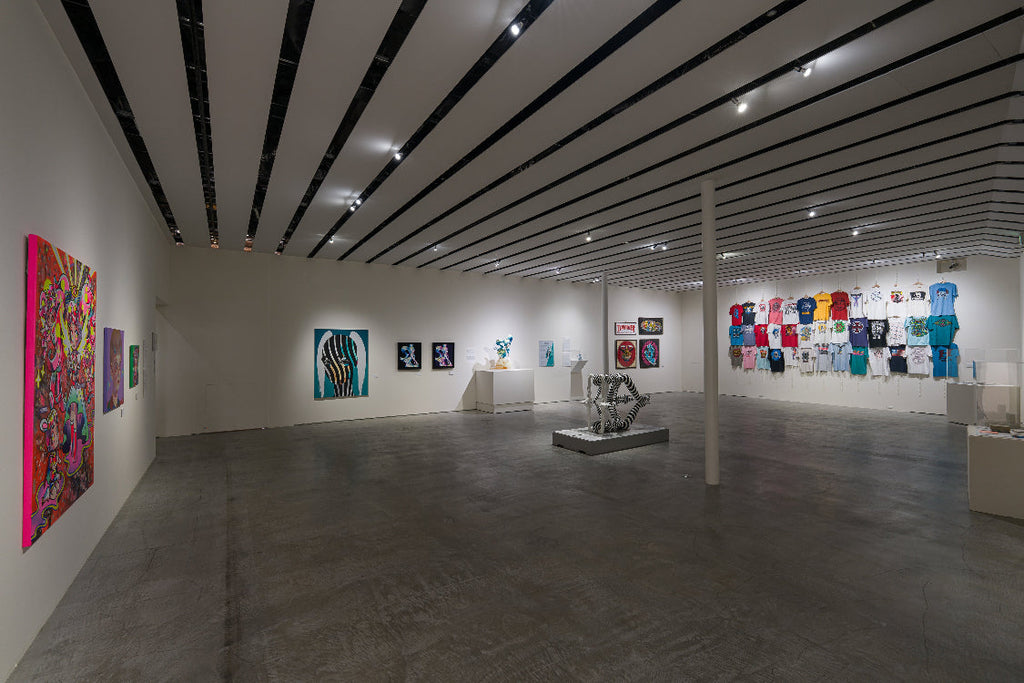
Exhibition view ©Karuizawa New Art Museum
"Connecting and Expanding (Crossing Borders and Expanding the Realm of Expression)"
RELATED ARTICLES
-
A Compass for Contemporary Art, Special Edition: Hatsune Miku Through the Looking-Glass
2026.07.22
FEATURE -
A Compass for Contemporary Art Chapter 4: The Landscape Beyond Manga as a “Method”
2026.04.06
FEATURE -
A Compass for Contemporary Art Chapter 3: Beyond the Five Senses, Infinite Art Experiences: Fluxus and the Expanding Corporeality
2026.01.30
FEATURE -
A Compass for Contemporary Art Chapter 2: Exploring Art from Multiple Perspectives
2025.12.30
FEATURE
ARTICLES CATEGORY

