
ARTICLES
A Compass for Contemporary Art Chapter 3: Beyond the Five Senses, Infinite Art Experiences: Fluxus and the Expanding Corporeality
2026.01.30
FEATURE

A Compass for Contemporary Art: Guided by the Exhibition "Connecting and Expanding (Crossing Borders and Expanding the Realm of Expression)"
Contemporary art is not just something to "see." Often, the experience itself—sharpening all five senses and savoring with one's entire body—becomes the artwork. In this third installment, we focus on Ay-O and Mieko Shiomi, members of "Fluxus," the avant-garde art movement that swept the world in the 1960s. We'll explore expressions that extend beyond the five senses and the nature of works that remain unfaded by time.
What is Fluxus?
Fluxus is an international art movement that emerged in the early 1960s, led by Lithuanian-American artist George Maciunas and developed worldwide, centered in New York. While anti-traditional and avant-garde in spirit, it lacks a strict definition. The term "Fluxus" means "flowing" in Latin, and it characteristically transcends the boundaries of existing genres such as painting, sculpture, and music in a fluid manner.
Participants included not only artists but also composers, designers, architects, and poets. From Japan, many artists and composers participated, including Ay-O, Mieko Shiomi, Yoko Ono, Shigeko Kubota, and Takehisa Kosugi.
Ay-O: The Law of Light, the Experience of Spectrum

Ay-O "Olympic Men's 100-meter sprint" 1992, 130.0 × 162.0cm, acrylic on canvas
Ay-O is an artist known worldwide as the "Rainbow Artist". After moving to New York in 1958, he became a central figure in Fluxus. His trademark is his colorful use of rainbow colors. He's called the Rainbow Artist because he transforms all phenomena in the world into rainbows.
However, Ay-O isn't simply trying to depict rainbows. He uses only colors composed of visible light between ultraviolet and infrared rays that can be perceived by human vision—specifically, gradations of six colors or multiples of six that humans can recognize. By using the rainbow's color arrangement, which forms the basis of all colors, he has created a distinct line of pictorial expression. In particular, while rainbows as natural phenomena are transient and eventually disappear, Ay-O's rainbows take on permanence through his depiction.

Ay-O "Cover of LIFE Magazine(Tokyo Olympic Games)" 1964, 32.5 × 26.0cm, oil on magazine
Ay-O has released works that transform the cover of the famous American photography magazine "LIFE" into rainbow colors. By converting everything in the world into rainbow color schemes, he transforms it into Ay-O's unique world. Whether it's sports, photography, or any phenomenon, when Ay-O handles it, it changes into a rainbow-colored world. In his "Olympic Series," you can enjoy compositions that convey the dynamic development of sports while experiencing these spectrums.
Beyond these visual expressions that foreground the spectrum, Ay-O creates works considering not only the five senses but also including the unknown sensation of the "sixth sense." Famous among these is the collection of works called "Finger Boxes," where viewers insert their fingers into wooden boxes whose contents cannot be seen, allowing them to experience sensory discoveries through touch. He has also created works exploring hearing with an orchestra formed by Fluxus members at Carnegie Hall, held shows stimulating vision and taste by providing six-colored meals, and produced many installations and performances. He has created numerous works that can be experienced beyond the five senses.
Mieko Shiomi: Music as "Duration of Time," Music Without End

Exhibition view ©Karuizawa New Art Museum
While Ay-O used the rainbow spectrum to foreground bodily sensations such as vision and touch, composer Mieko Shiomi, who was also active as a central member of Fluxus, reconceptualized "time"—an invisible flow itself—as art. Shiomi defines the essence of music as "the recognition of the duration of time." She expressed that not only sounds that reach the ears but also visual movements and people's movements can be perceived as musical experiences in time.
The foundational work embodying this concept is her "Event Collection of Small Pieces." The 23 small cards in this collection each contain a brief "instruction." Viewers read the content and need to express it using their own bodies. This artwork, which requires viewers themselves to perform, presents a free form of art not necessarily bound by musical scores or music.
Another interesting attempt is "Endless Music," which Shiomi created for a stamp exhibition by Fluxus members. The box contains four stamps depicting different melodic fragments, along with instructions printed on the inside of the lid. Following several simple rules, participants can compose freely by stamping as they wish. Because the stamps can be flipped and repeatedly applied, the resulting compositions vary in scale and duration depending on the individual, allowing for potentially endless music. While the work appeals to the sense of hearing, it can also be enjoyed visually through its graphic patterns.
At the Karuizawa Art Museum, visitors can view a video documenting the museum director, Eiichi Matsuhashi, composing music by pressing these stamps and listening to the resulting sound.

Mieko Shiomi "Endless Music" 1997, stamp set, 18.0 x14.5x 3.5cm ©Karuizawa New Art Museum
Just as Ay-O repainted the world's colors with the rainbow spectrum, and Mieko Shiomi transformed everyday behaviors into music, Fluxus art is truly fluid, yet gives us opportunities to reconsider our familiar sensations anew.
These are not works to be quietly appreciated in museums. They are expressions that are completed by touching with fingertips, listening intently, or participating as "performers" ourselves. The "expansion of the five senses" they presented still approaches us vividly after decades.
Ay-O's Finger Boxes and Shiomi's "Event Collection of Small Pieces" were actually sold at the "Fluxus Shop" operated by Maciunas. Maciunas believed that art should be sold cheaply and in large quantities, like products in a supermarket, and put this into practice. Although they were too progressive to sell well at the time, they are now held in many museum collections. In the fifth exhibition room of the "Connect and Expand" exhibition, posters used at that time are on display.

Poster displayed at Karuizawa New Art Museum ©Karuizawa New Art Museum
Experiences that sharpen the senses and sometimes make ourselves part of the artwork—their expansiveness no longer fits within the walls of exhibition rooms.
RELATED ARTICLES
-
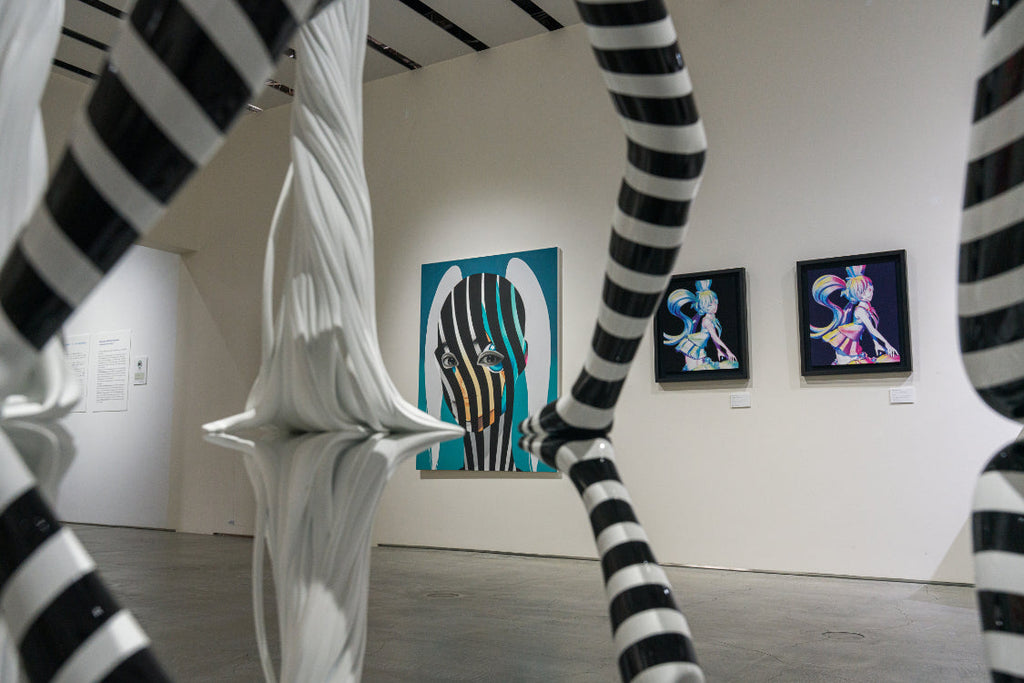
A Compass for Contemporary Art, Special Edition: Hatsune Miku Through the Looking-Glass
2026.07.22
FEATURE -
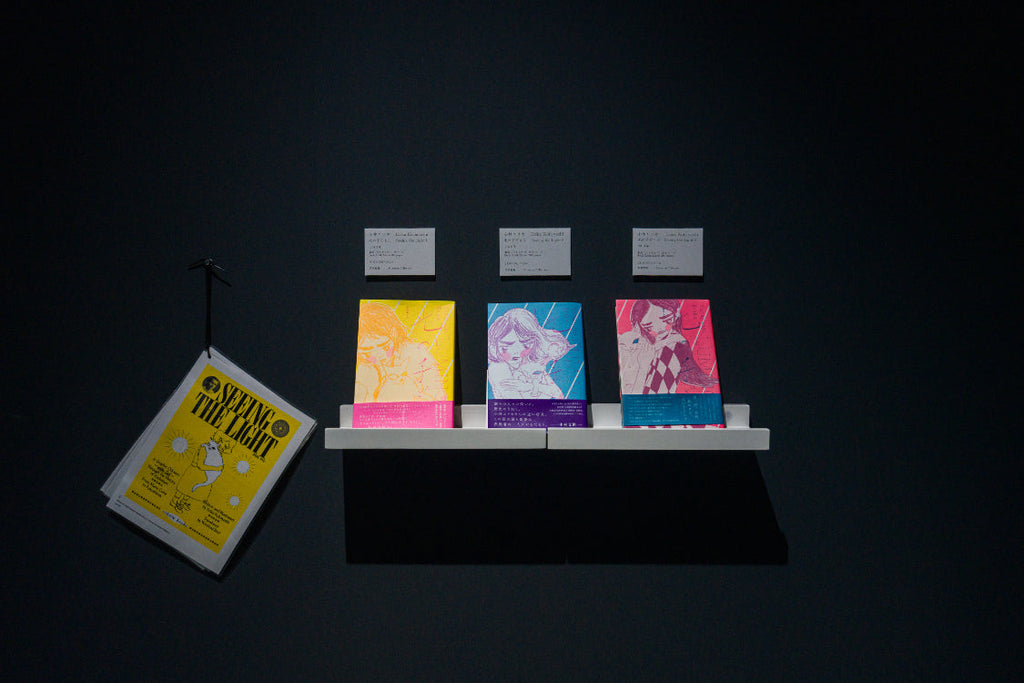
A Compass for Contemporary Art Chapter 4: The Landscape Beyond Manga as a “Method”
2026.04.06
FEATURE -
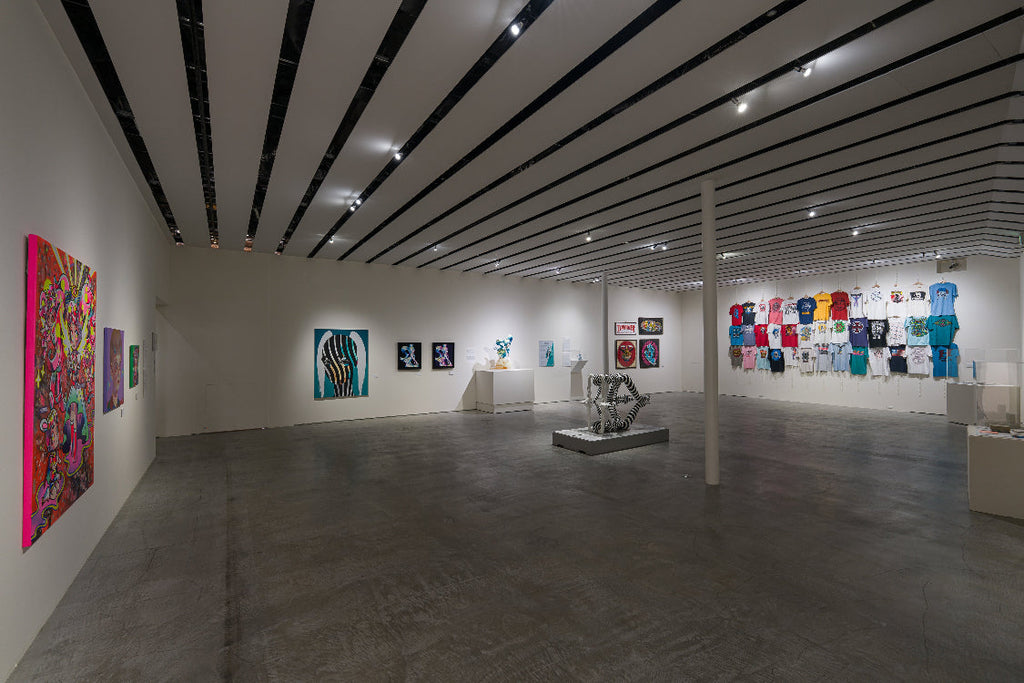
A Compass for Contemporary Art Chapter 2: Exploring Art from Multiple Perspectives
2025.12.30
FEATURE -
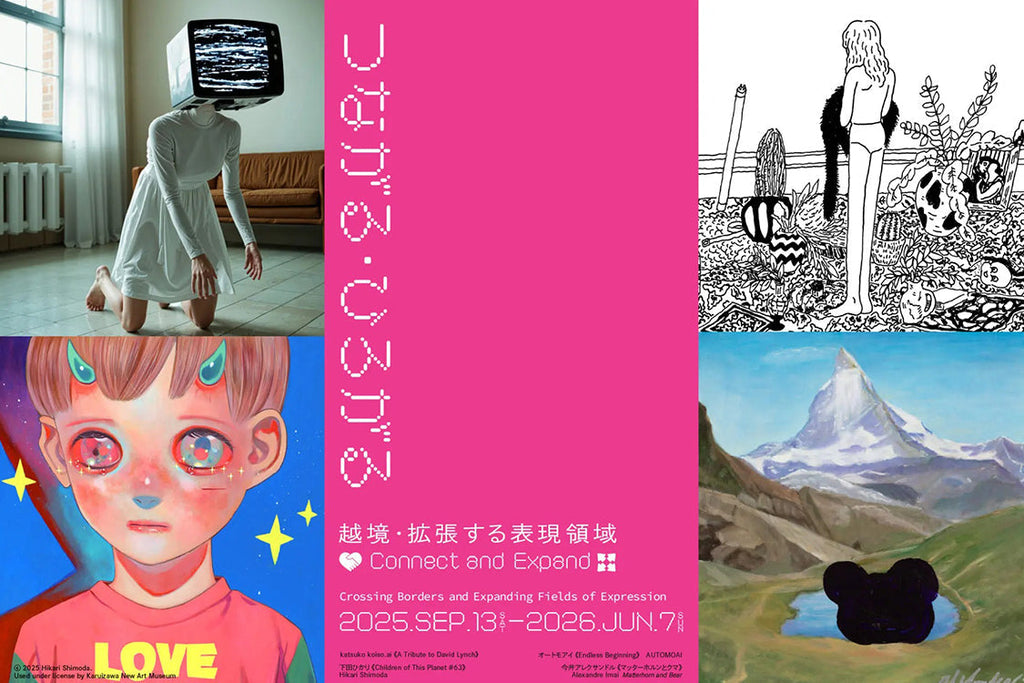
A Compass for Contemporary Art Chapter 1: What Is Contemporary Art, and How Does It Deepen Our Way of Looking at Art?
2025.12.15
FEATURE
ARTICLES CATEGORY

