
ARTICLES
Designing Spaces from the Details | Whitestone Gallery × Kengo Kuma's Challenge
2024.10.25
FEATURE

The exhibition view: We Love Korea II (Photo by Hongseok Kim)
Whitestone Gallery Seoul opened its doors in September 2023 and now celebrates its one-year anniversary. To mark this significant milestone, we turn our attention to the essence of the gallery itself ー the space. As a part of the "ART × ARCHITECTURE" series, this feature explores the dialogue of art and architecture.
Located at the base of Namsan, Whitestone Gallery Seoul was thoughtfully renovated by Kengo Kuma. Rather than replacing the existing structure, the renovation embraced its original complexity, transforming it into a refined environment for contemporary art. The result is a space where architecture and artwork coexist in harmony, each enhancing the presence of the other.
This article explores how Kengo Kuma and his team at KKAA (Kengo Kuma and Associates) brought this vision to life, examining the philosophy and process behind the design. What qualities make a space ideal for art? What design elements did Kuma prioritize? And how did the character of Seoul influence the outcome? Through interviews with the architectural team, we uncover the architectural ideas that shaped one of the city’s most distinctive gallery spaces.

The grand opening exhibition view: We Love Korea
Reimagining the Existing Structure
"The most important element of this project was how to utilize the existing building," says Masatoshi Tobe, a partner at KKAA (Kengo Kuma and Associates). Whitestone Gallery Seoul is a renovation of a building that was originally a restaurant complex, and the major challenge was how to transform its complex structure into a coherent art gallery space.
The goal was not simply to refurbish the building, but to bring out its original character while crafting an environment where artworks could be shown at their most compelling. By preserving features such as the slanted ceiling lines and original materials, the architecture retains a sense of complexity that contrasts with the abstraction of a white cube. This tension gives rise to a gallery space that feels distinctive and full of personality that sets it apart from more conventional art venues.
This harmony between architecture and art reflects Kengo Kuma’s design philosophy, where sensitivity to place and form guides every decision.

Whitestone Gallery Seoul B1F Space
In designing the basement level, particular attention was given to creating a sense of visual balance and spatial stability. The sweeping staircase and soaring ceiling lend the space a sense of grandeur, leaving a lasting impression on visitors. The expansive white hall offers a generous setting that can comfortably accommodate large-scale works, making it an exceptional environment for bold artistic expression. While other floors feature grey mortar-finished flooring, the basement retains its original tiles, adding a layer of character and contrast to the overall design.
“Seoul has this fascinating atmosphere where old buildings are turned into cafés and contrasting elements come together in ways that feel almost chemical,” says Masatoshi Tobe, partner at KKAA. “With the renovation of Whitestone Gallery Seoul, that same complexity and abstraction have come together in a dynamic and compelling way.”

The exhibition view: SOONIK KWON: Today
Architecture in Motion, Art in Reflection
Whitestone Gallery Seoul spans six floors, from the basement level to the rooftop, offering an expansive and multifaceted gallery experience. Among its many features, the second floor stands out as a particularly striking example of how architectural complexity and artistic space intersect. Utilizing the original split-level design, a series of exhibition rooms—both large and small—are arranged in an organic, almost labyrinthine layout.
Descending the staircase to the right of the elevator hall, visitors are greeted by a soaring atrium and an impressive expanse of wall, perfectly suited for showcasing large-scale works with a commanding presence. In contrast, ascending the stairs to the left leads to a more intimate room, where viewers can quietly engage with the art in a contemplative setting.

From the exhibition view: The color BLUE: Katsuyoshi Inokuma, Lee Chae, Liu Ke
The interplay of angled pillars, slanted walls, and layered ceiling planes brings a sense of movement and architectural rhythm to the space. These carefully considered elements amplify the presence of the artworks, shaping an environment where visual tension and spatial openness coexist. Instead of adhering to the neutrality of a conventional white cube, the design embraces asymmetry and texture, offering an exhibition experience that feels immersive, tactile, and alive.
“One of the most compelling areas for me is the open gallery on the second floor,” says Noémie from KKAA. “The original structure was highly complex, and it posed a real challenge when we tried to adapt it to a new function. To create clarity within that complexity, we introduced vertical surfaces that act as both spatial dividers and canvases for the artworks. This allowed us to establish a visual language that respects the artists’ intentions.”
The mezzanine overlooking the gallery floor deepens the spatial engagement. It creates a layered experience where visitors are not only encountering the art but also moving through a space that encourages reflection and exploration. “There is a kind of intimacy here that is difficult to find in most galleries,” Noémie adds. “It feels open yet personal, structured yet fluid. The space responds to the presence of its visitors in a way that makes the experience feel uniquely human.”

Whitestone Gallery Seoul
Redesign Inspired by the Existing
Throughout Whitestone Gallery Seoul, thoughtful redesigns inspired by the building’s original structure can be found at every turn. Each floor reflects a careful balance between preservation and innovation, where existing architectural features are honored while new design elements are subtly and skillfully introduced.

The rock garden on the 4th floor
One example is the basement level, where a wall has been added beside the grand staircase to conceal the elevator hall from immediate view. This deliberate intervention guides the visitor’s gaze and maintains a sense of visual continuity as they descend, creating a cohesive and immersive flow within the space. On the fourth floor, a tranquil exhibition room features a stone garden, serving as a quiet interlude before ascending to the rooftop. This space acts as a reflective threshold, offering a moment of pause within the overall experience.
Art appreciation is often a deeply personal and emotional encounter. It requires energy and attention, and moments of quiet are essential. By offering spaces of calm and introspection between more intensive viewing zones, the gallery creates an environment that supports a more layered and meaningful engagement with the artworks and the ideas behind them.
A Warm Vertical Line That Unifies Different Floors
At Whitestone Gallery Seoul, each floor offers a distinct spatial experience, providing visitors with a unique way of engaging with art. What connects these varied spaces into a cohesive flow is a single curtain, designed as an architectural element.

View of the stairwell, where raw concrete, softly swaying curtain, and delicate glass cases harmonize.
The curtain that extends from the fourth floor down to the basement serves as a visual thread, drawing the eye vertically and connecting the building’s multiple levels into a unified spatial composition. Its color was chosen to harmonize with the tone of the existing concrete, and its relationship with lighting was refined through meticulous adjustments. Countless experiments were carried out to arrive at the most natural and elegant form.
Rather than evoking the pristine brightness of a classic white cube, the curtain introduces depth through shadow and tone. Its soft folds enhance the gravity of the concrete while simultaneously accentuating the delicacy of the glass-encased stairwell. The result is a space defined by contrast, where texture and materiality are brought into quiet dialogue.

Reception hall just inside the gallery entrance. The glass-encased stairwell can be seen in the back.
Harmony with the Surrounding Area
Climbing the slope from Seoul Station with Namsan to one side, visitors eventually come upon Whitestone Gallery Seoul, its dark glass façade quietly reflecting the lush greenery around it. As architect Kengo Kuma explains, “By darkening the building, I wanted to dissolve its architectural presence and create an introductory experience that shifts awareness from the everyday city to an abstract, white space of art.”
The black exterior glass reflects the surrounding park landscape, allowing the structure to blend seamlessly into its environment. In doing so, the building becomes less a landmark and more a threshold—an elegant passage from the rhythm of the city into the contemplative atmosphere of the gallery within.

View from the rooftop showing the sunset enveloping Seoul in orange
At the rooftop, the greenery of Namsan Park becomes part of the gallery itself, framing a unique space where city and nature gently intersect. The view unfolds like a painting, bordered by the architecture, inviting visitors to pause and take in the shifting light and breeze of Seoul. It is a place for quiet reflection, where the experience of the exhibition lingers in the open air.
This rooftop, often seen as the gallery’s final piece, extends the exhibition into the landscape. As an oasis above the city, it offers a moment of calm that completes the spatial journey, allowing art, architecture, and environment to converge in a serene conclusion.

The exhibition view: We Love Korea II
"Interest in such galleries and exhibition spaces is rapidly growing, and I think this outdoor space is unique. Something you rarely see in other art galleries. It can certainly function as an exhibition space, but at the same time, it offers the atmosphere of a park, where visitors can relax and spend quiet, personal moments entirely on their own terms.” says Woojung Ha (Jun) of KKAA.

Whitestone Gallery Seoul
A Space for Art in Resonance with Nature
Whitestone Gallery Seoul stands as a testament to architect Kengo Kuma’s design philosophy—a space where architecture and art exist in dialogue. Visitors are invited into an environment of discovery and emotional resonance, where every detail reflects careful thought and intention. With its refined spatial language, the gallery asserts a distinct presence within Seoul’s art scene and offers an experience that leaves a lasting impression.
At the heart of Kuma’s vision is the desire to create a quiet space in harmony with nature, a place that allows visitors to momentarily step away from the noise of the city. Nowhere is this more evident than on the rooftop, where the greenery of Namsan Park is seamlessly woven into the design. Kuma describes his approach as one that “allows the building to become part of nature through layers of green.” His vision transforms the gallery from a mere architectural structure into a space for dialogue between the built environment and the natural world.
On the Whitestone Gallery website, a special feature titled :ART × ARCHITECTURE” explores the possibilities that emerge when these two disciplines intersect. To learn more about how art and architecture shape and inform one another, we invite you to explore the link below.
RELATED ARTICLES
-
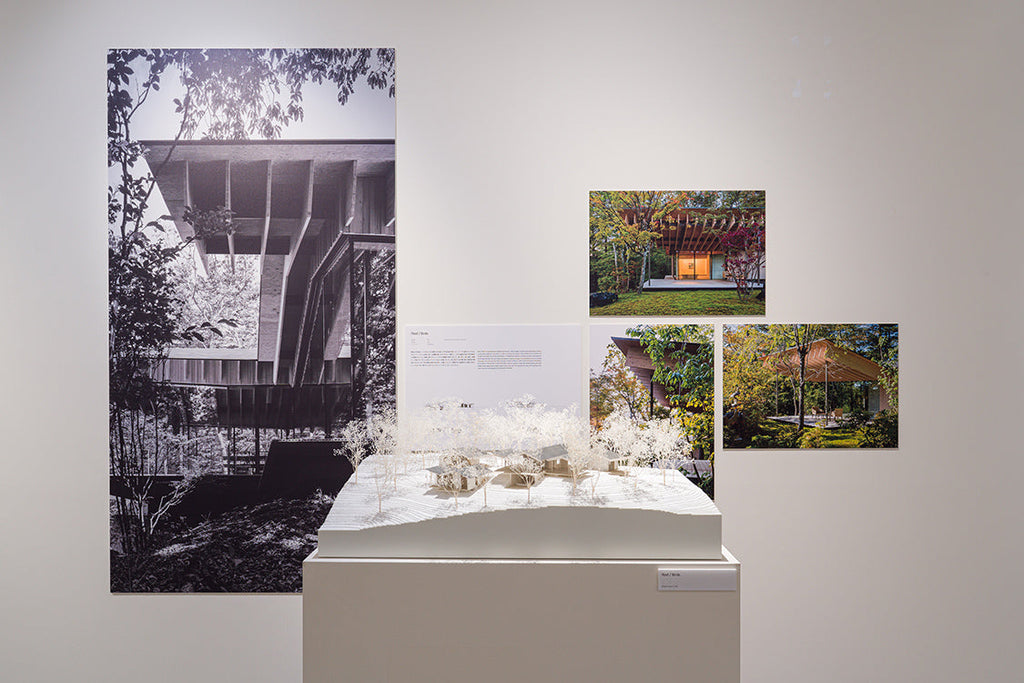
Kengo Kuma Explores the Fusion of "Topography" and "Architecture": Exhibition Report
2024.12.20
FEATURE -

Hishida x Whitestone | The Synergy of Art and Architecture in Living Spaces
2024.08.09
FEATURE -
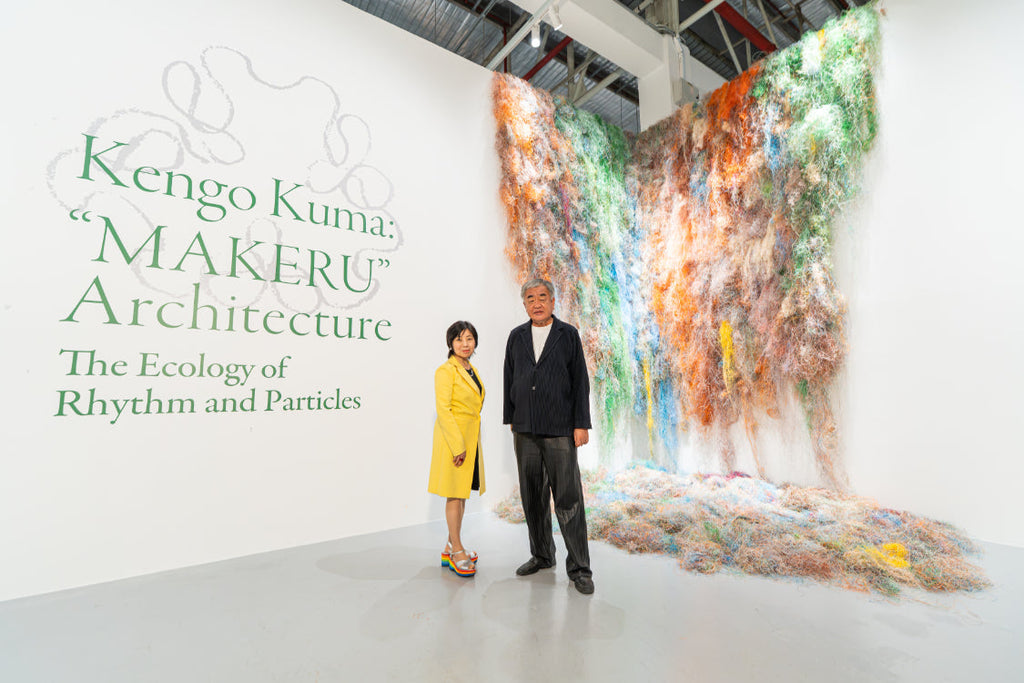
Yuko Hasegawa × Kengo Kuma Session Report: The Future of Architecture Driven by Nature, Sensibility, and Materials
2026.06.15
REPORT -
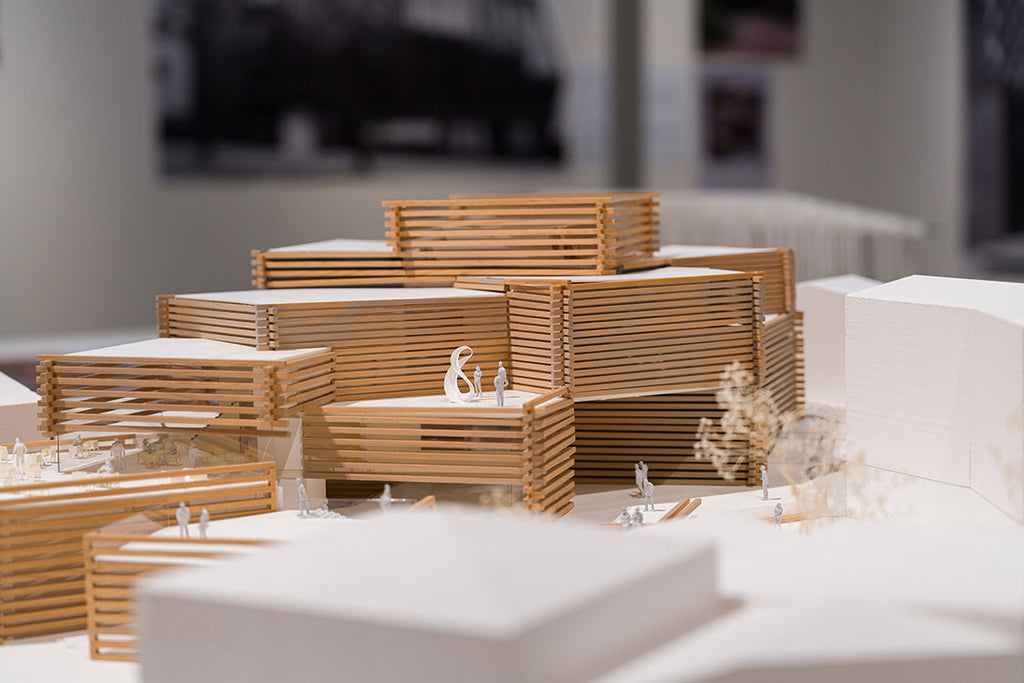
Architecture That Shapes the Landscape: Kengo Kuma and the Memory of Nature
2025.08.20
INTERVIEW

ARTICLES CATEGORY

