
ARTICLES
Aruta Soup's Public Art Appears in Shibuya
2026.05.27
INTERVIEW

On the wall of “Jinnan Valley,” a vintage building that has quietly watched over the culture of Shibuya, Tokyo, a rabbit character named “ZERO” has suddenly appeared, seemingly breaking through the wall and leaping out into the world.
Meet Aruta Soup, the contemporary artist turning heads with his raw, graffiti-inspired aesthetic. What’s the story behind his latest street intervention? From his creative drive to his core themes, this interview explores how he bridges the gap between the canvas and the streets.
- What prompted this public art project?
Aruta Soup: I have a longtime friend from around the time I moved to the UK, and we had been saying for a long time, “Someday we should do something together.” This time, he connected me with the client, and we ended up moving the project forward together. I’m very grateful.
- What is the theme of this work?
Aruta: Since Jinnan Valley’s concept is Vintage & Street, I used warm and pastel colors for the fill-in, and charcoal for the outline, keeping in mind that I wanted to give the city a softer impression. The motif combines lettering and character work, so I think people who can decode it will enjoy it as well.
Inside the building, I have provided monochrome artwork for Jinnan Valley, so I would be happy if people enjoy the contrast with the mural.

Work in Progress
- You have painted on many walls both in Japan and abroad. How is painting a mural different from painting on canvas and other surfaces?
Aruta: I think spontaneity is what distinguishes murals from canvas. For example, when you turn a corner and a wall that was plain yesterday suddenly has something flashy painted on it today, the way you encounter the work is different, and that’s interesting.
Also, this happens in any country, but there are incidents unique to the street, such as someone tagging over a mural right after it has been painted. In order for ordinary people to see a canvas work, it generally has to be in a gallery, so except for special cases, I do not think that kind of thing happens.
Also, because I am inevitably painting outside most of the time, the sense of distance with local people becomes closer. I enjoy temporarily teaming up with local writers I became friends with at graffiti festivals and going out to paint together.
A long time ago, when I was painting a piece (mural) in Berlin, because my letters are SOUP, local kids asked me, “Are you 1UP clue?” When I answered, “No,” the kids said, “But anyway, you’re the first Asian writer we’ve seen, so can we have your autograph?” So I drew a tag on a T-shirt for them. Then the kids started doing graffiti together, the three of them, while saying, “When we grow up, we’re going to get into 1UP clue.” They wrote “1UP.” I still remember that scene vividly.
Like the kids I mentioned above, I think initial impulse and quick reaction are more important than anything else in murals, and in some countries graffiti writers are also dark heroes. I am also one of the people who has long been fascinated by the strength and transience of murals.
- How would you like people to view the completed work?
Aruta: I want it to quietly blend into the city. I think it would be nice if it were casual enough that people use it as a meeting spot with someone. Rather than it being only about me personally, I also hope that as more street art increases in Shibuya, the administrative side will notice the value and the interesting nature of murals. I think there could be a fun future if more legal walls, walls where painting is permitted, increase in Japan’s urban areas like they have overseas.

Work in Progress
ARTIST
RELATED ARTICLES
-
Art Busan 2026 Report: From Art Marketplace to a Stage for Culture
2026.06.11
REPORT -

Singapore Art Week 2026 Report: The Possibilities of Art That Captivates Beyond the Gallery
2026.02.16
REPORT -
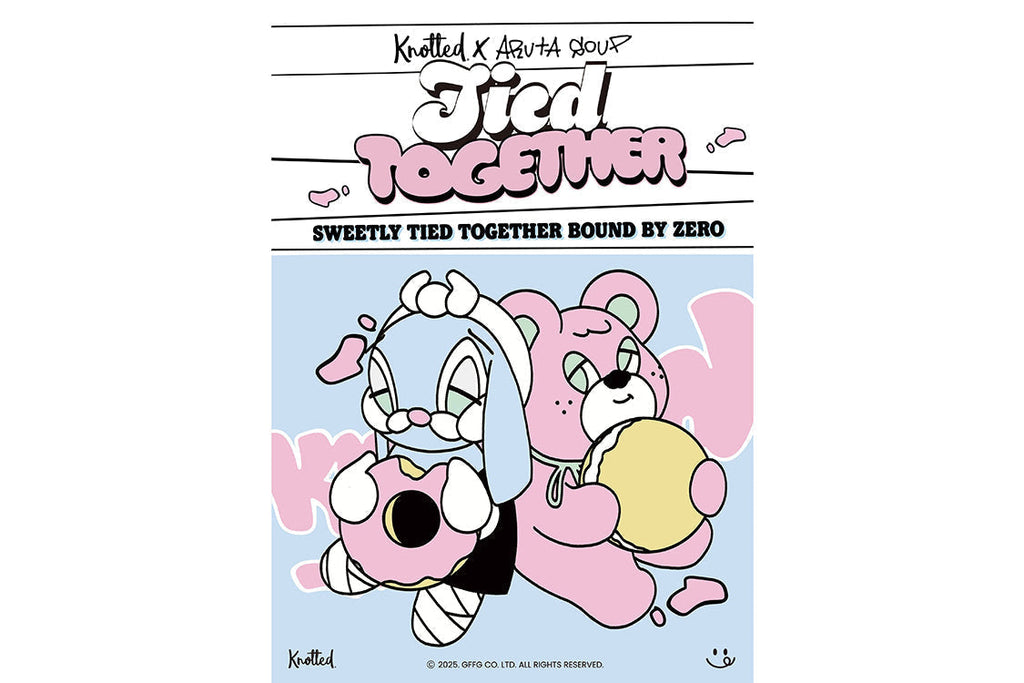
Aruta Soup × Knotted | A Sweet Collaboration of Art and Donuts
2025.06.26
ART NEWS -

New Year Special: The Year of the Snake Expressed by Three Artists
2025.01.20
FEATURE


ARTICLES CATEGORY

